

HYBRID OR TRADITIONAL CLOUD, PICK THE RIGHT STRATEGY

HYBRID CLOUD

Hybrid cloud integrates on-premises systemsprivate cloud, and public cloud into a unified system that allows seamless data and workload sharing.

  • Integrates multiple environments (on-prem, public, private).
  • High, as workloads can move between environments.
  • Maximum control over critical workloads.
  • Combines scalability with local control.
  • Optimized cost through workload allocation.
  • Ideal for enterprises with diverse workloads.

TRADITIONAL CLOUD

Hybrid cloud integrates on-premises systemsprivate cloud, and public cloud into a unified system that allows seamless data and workload sharing.

  • Integrates multiple environments (on-prem, public, private).
  • High, as workloads can move between environments.
  • Maximum control over critical workloads.
  • Combines scalability with local control.
  • Optimized cost through workload allocation.
  • Ideal for enterprises with diverse workloads.

WHY CHOOSE HYBRID CLOUD

Hybrid cloud offers unparalleled agility and innovation. Businesses that adopt hybrid cloud strategies can take advantage of the latest cloud technologies while maintaining control over critical data and workloads. This balance ensures maximum efficiency, security, and scalability. Check our hybrid cloud key features:

Cost Optimization Scale into the public cloud only when needed, avoiding infrastructure overprovisioning.

Flexibility Combine the best of both. Run workloads where they perform best - public for scalability, private for security.

Data Control Sensitive data can stay on-premises to meet compliance and governance standards.

Seamless Integration Leverages existing on-premises systems while adopting new technologies.

CLOUD NATIVE EXPLAINED

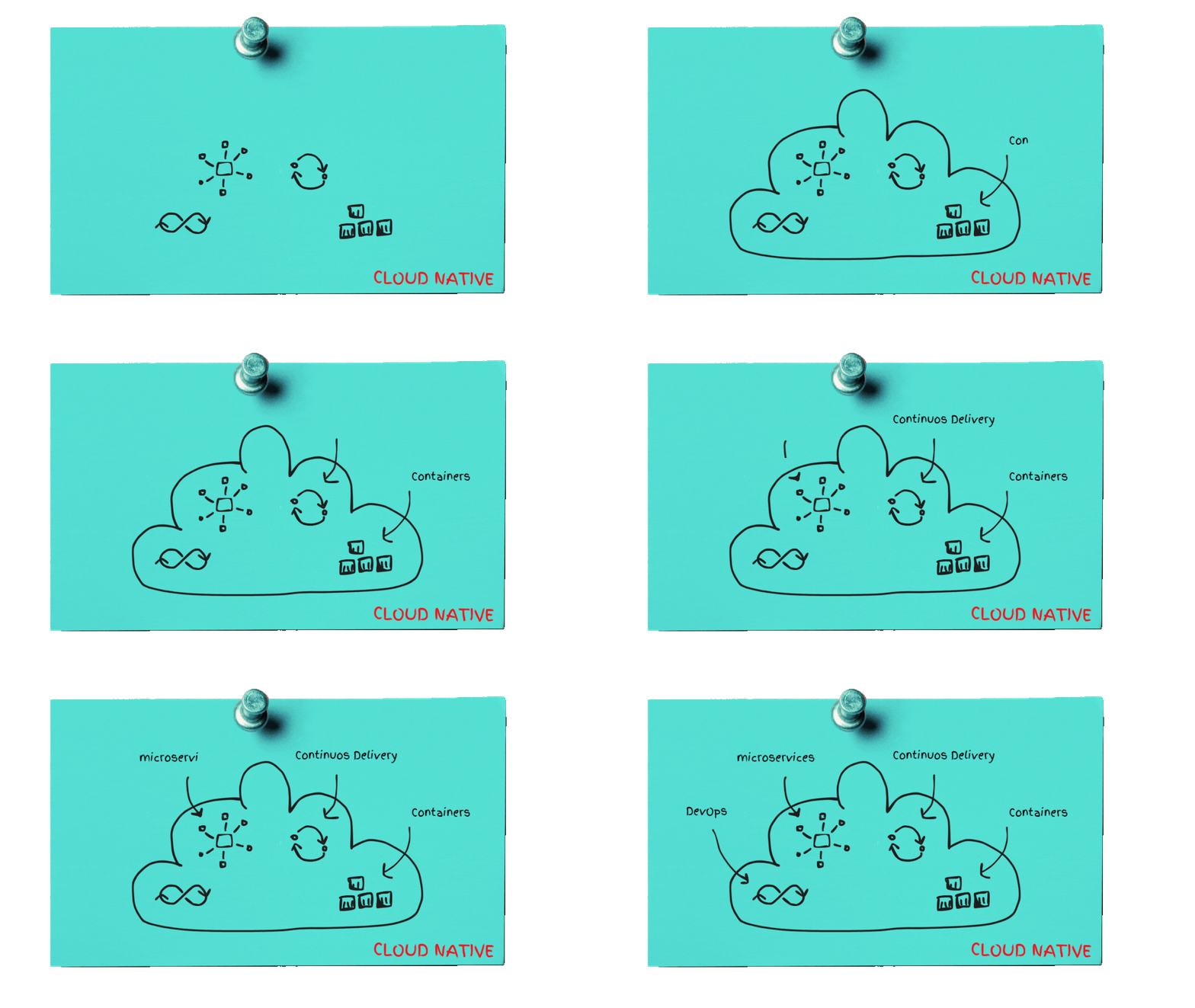
So how does cloud native fit in? Cloud native refers to applications that are specifically designed to run in a cloud computing environment. These applications are built to take full advantage of cloud computing models, which are scalable, flexible, and resilient. These applications are built using modern frameworks, tools, and architectures like microservices, containers, and Kubernetes.

Key terms to know

You may have come across some of these terms connected to cloud terminology. Let us explain what they mean, how can they help and make you better understand the whole topic.

Containerization is an efficient method to package applications and their dependencies so they can run consistently across different environments. Containers are an essential technology in cloud computing, providing portability, scalability, and flexibility for modern application development and deployment.

Platforms like Kubernetes manage and scale containers in cloud environments. Kubernetes is one of the core technologies for cloud-native applications and is widely used to manage hybrid cloud deployments. Kubernetes and containerization form the backbone of modern hybrid cloud architectures. They enable businesses to manage applications flexibly, consistently, and efficiently across diverse environments, unlocking the full potential of hybrid cloud solutions.

An architectural style where an application is divided into small, independent services that communicate via APIs.
 
Cloud-Native Application Protection Platform is a security framework designed to protect cloud-native applications. It integrates various security tools and practices to provide end-to-end protection throughout the application lifecycle, from development to deployment.


WHY DATANET

  • Long-term partnership instead of one-off solutions
  • Independent consultants, without favouring any particular cloud provider
  • Our service is not merely an expense – it is an investment with a rapid return
  • Whether you are operating on-premises data centres, cloud environments, or hybrid architectures, we are here to help
Cloud native banner

CONTACT US

FOLLOW US
CONTACT US

Datanet Systems
Adresa: Str. Sfântul Elefterie nr. 18, Cladirea Elefterie, Parter, Sector 5, București 050525
Telefon: +40 21 3178787
Fax: +40 21 3179797
Email: office@datanets.ro

Datanet Systems Cluj
Adresa: Str. Tăietura Turcului, nr. 47, Cladirea A2, etaj 3, Cluj, 400221
Telefon: +40 21 305 30 19
Email: office@cluj.datanets.ro

DO NOT MISS

○ Știri, noutăți și evenimente
○ Posturi disponibile
○ Termeni și condiții
○ Politica de cookies
○ Politica de prelucrare a datelor
○ Responsabilitate socială
○ Politica de avertizor
○ Politica anti-mita

Newsletter